
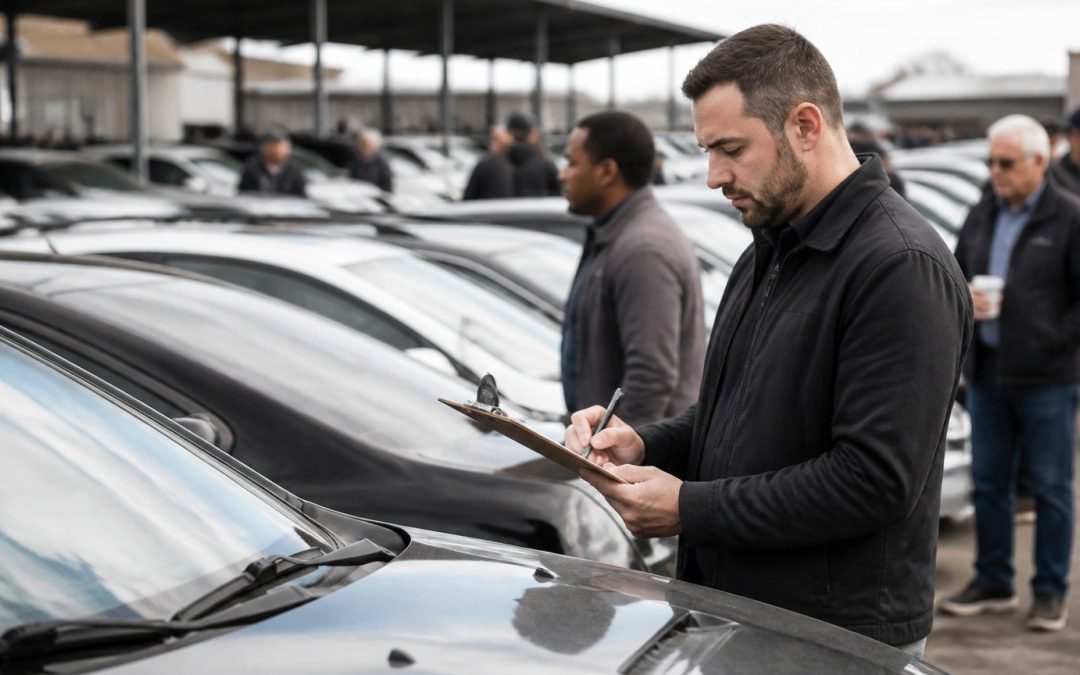
How to Buy Cars at Dealer-Only Wholesale Auctions
Last Updated: October 19, 2026
Buying cars at wholesale dealer auctions is one of the best ways to acquire vehicles at competitive prices. Whether you want to start a used car business, sell a few vehicles each month for additional income, or build a full-time automotive business, wholesale auctions offer opportunities that aren’t always available to the general public.
Traditionally, buying vehicles directly at dealer-only auctions required obtaining your own dealer license, establishing a commercial dealership location, purchasing insurance, securing a surety bond, and maintaining ongoing business expenses.
But what if you could access dealer-only auctions, bid on vehicles yourself, and participate in the automotive resale business without spending thousands of dollars opening your own dealership?
That’s the opportunity offered through Your Auto Dealership LLC.
Through an established dealership program, qualified members can participate in wholesale automotive auctions as authorized dealership representatives, without independently obtaining their own dealer license.
With memberships starting at just $249 per month, Your Auto Dealership provides a lower-overhead alternative to establishing and maintaining a traditional licensed dealership.
In this guide, we’ll explain how wholesale auctions work, the costs of traditional dealer licensing, how to buy vehicles through a dealership membership program, and how to maximize profits while minimizing expenses.
Table of Contents
- Understanding Wholesale vs. Public Car Auctions
- Why Buy Cars at Dealer-Only Wholesale Auctions?
- How Much Does It Cost to Get a Dealer License?
- How to Buy Cars at Wholesale Auctions Without Your Own Dealer License
- How Your Auto Dealership LLC Works
- Your Auto Dealership Membership Costs and Benefits
- Traditional Dealer License vs. Your Auto Dealership: Cost Comparison
- How to Inspect Vehicles at Wholesale Auctions
- Understanding Auction Fees and Vehicle Costs
- Bidding Strategies for Wholesale Car Auctions
- After the Auction: Payment, Titles, and Transportation
- Common Mistakes to Avoid
- Frequently Asked Questions
- Getting Started With Your Auto Dealership LLC
1. Understanding Wholesale vs. Public Car Auctions
Car auctions generally fall into two categories: public auctions and dealer-only wholesale auctions.
Public Car Auctions
Public auctions allow individuals to purchase vehicles without holding a dealer license.
These auctions may include repossessed vehicles, government surplus vehicles, trade-ins, and other used inventory.
However, public auctions often attract retail buyers willing to pay higher prices, which can reduce the potential profit margin for someone purchasing vehicles to resell.
Dealer-Only Wholesale Auctions
Wholesale auctions primarily serve licensed automotive dealerships and other authorized automotive businesses.
Popular wholesale auction companies include:
- Manheim
- ADESA
- Independent regional dealer auctions
- Other dealer-only wholesale auction platforms
These auctions offer inventory from dealerships, financial institutions, rental car companies, fleet operators, and other commercial sellers.
Vehicles are generally sold at wholesale market prices rather than retail asking prices.
For individuals interested in buying and reselling vehicles, this can create opportunities to purchase inventory at prices that allow room for repairs, expenses, and potential profit.
The challenge is that most wholesale auctions restrict participation to licensed dealers and approved representatives.
Your Auto Dealership LLC provides an alternative for eligible individuals who want to participate in these auctions without opening their own independently licensed dealership.
2. Why Buy Cars at Dealer-Only Wholesale Auctions?
Wholesale auctions offer several advantages for individuals interested in purchasing and reselling vehicles.
Access to Large Inventories
Major wholesale auction platforms offer thousands of vehicles, including:
- Used cars and SUVs
- Pickup trucks
- Off-lease vehicles
- Dealership trade-ins
- Repossessed vehicles
- Fleet and rental vehicles
- Luxury and specialty vehicles
This selection allows buyers to find vehicles that match their budget and local market demand.
Competitive Wholesale Pricing
Vehicles sold at dealer auctions are generally priced according to wholesale market demand rather than retail asking prices.
Although not every vehicle is a bargain, knowledgeable buyers can identify opportunities to purchase vehicles below their expected resale value.
In-Person and Online Bidding
Many wholesale auctions offer both physical auction lanes and online bidding.
Depending on auction eligibility and registration, buyers may participate through:
- Live auction bidding
- Online simulcast auctions
- Timed online auctions
- Buy Now listings
- Dealer-to-dealer transactions
Opportunities for Part-Time and Full-Time Resellers
You don’t necessarily need to sell dozens of vehicles each month to benefit from wholesale auctions.
Someone purchasing and reselling two or three vehicles per month may be able to generate meaningful additional income.
However, profitability depends heavily on acquisition costs, vehicle condition, selling expenses, and operating overhead.
Keeping your fixed expenses low is one of the most important advantages a small automotive reseller can have.
3. How Much Does It Cost to Get a Dealer License?
One of the biggest obstacles to starting a traditional used car dealership is the expense of obtaining and maintaining a dealer license.
Requirements vary by state, but most independent dealerships must satisfy several financial and regulatory obligations.
Commercial Dealership Location
Many states require a licensed dealer to maintain an approved commercial business location.
Depending on state and local requirements, this may involve:
- Commercially zoned property
- Office space
- Vehicle display areas
- Permanent signage
- Posted business hours
- Local zoning approval
- Government inspections
Rent alone can become a significant monthly expense.
Dealer Surety Bond
Most states require a surety bond.
Bond amounts commonly range from $10,000 to $50,000 or more, depending on the state.
The dealer typically pays an annual bond premium rather than depositing the entire bond amount.
Dealership Insurance
Traditional dealerships may need garage liability insurance, general liability coverage, and other insurance policies depending on their operations and state requirements.
These policies represent recurring business expenses.
Licensing and Administrative Expenses
Additional costs can include:
- Dealer license application fees
- Business registration
- Dealer education
- Background checks
- Local business permits
- License renewals
- Accounting and compliance expenses
Example: Traditional Dealership Operating Costs
Consider the following hypothetical expenses for a small independent dealership.
|
Expense |
Estimated Monthly Cost |
|---|---|
|
Commercial property rent |
$1,000 |
|
Dealership insurance |
$250 |
|
Surety bond premium |
$50 |
|
Utilities and office expenses |
$150 |
|
Licensing and administrative costs |
$50 |
|
Total Monthly Overhead |
$1,500 |
|
Total Annual Overhead |
$18,000 |
These are illustrative figures, not guaranteed or state-specific costs. Actual dealership expenses can be substantially higher or lower.
This means a small dealership could spend $18,000 annually just maintaining its basic operations, before purchasing inventory, paying auction fees, or making a profit.
For someone selling only a few vehicles each month, those expenses can consume a large percentage of earnings.
Your Auto Dealership LLC was designed to provide a lower-overhead alternative.
4. How to Buy Cars at Wholesale Auctions Without Your Own Dealer License
There are several ways individuals may purchase vehicles through wholesale auctions without personally holding an independent dealer license.
Option 1: Use an Auction Broker
Auction brokers and licensed dealers may offer services to purchase vehicles on behalf of customers.
Typically, you identify the vehicle, provide bidding instructions, and pay the broker a service fee.
However, brokers may charge transaction fees or commissions, and you may have limited control over the bidding process.
Option 2: Open Your Own Licensed Dealership
Obtaining your own dealer license provides independence but requires satisfying state licensing, business location, insurance, bonding, and ongoing compliance requirements.
This may be appropriate for someone establishing a traditional full-service dealership.
For individuals wanting to start small, the overhead can be difficult to justify.
Option 3: Join Your Auto Dealership LLC
Your Auto Dealership LLC allows qualified members to participate directly in dealer-only wholesale auctions as authorized representatives of an established dealership.
Unlike a traditional auction broker, members place their own bids.
You select the vehicles you want, research their values, determine your maximum purchase price, and bid yourself through approved auction arrangements.
Members don’t need to independently establish their own licensed dealership simply to participate through the program.
This approach allows individuals to enter the wholesale automotive business with substantially less fixed overhead than a traditional dealership.
Auction participation and resale activities remain subject to program requirements, auction approval, and applicable laws.
5. How Your Auto Dealership LLC Works
Your Auto Dealership LLC is a dealership membership program designed to help individuals participate in wholesale vehicle purchasing and resale without the expense of opening their own independently licensed dealership.
Members Bid on Their Own Vehicles
One of the most important differences between Your Auto Dealership and traditional auction brokers is that members bid on vehicles themselves.
As authorized representatives of the dealership, eligible members can participate in approved dealer-only auctions.
Members can:
- Research wholesale vehicle inventory
- Choose which vehicles they want to purchase
- Determine their own maximum bids
- Bid directly at participating auctions
- Make their own vehicle purchasing decisions
There is no need to call a broker every time you want to place a bid.
No Separate Dealer License Required
Members participate through Your Auto Dealership’s established dealership structure rather than independently obtaining their own dealer license.
This avoids many of the expenses and administrative requirements associated with establishing a separate dealership.
No Separate Commercial Car Lot Required
Traditional dealerships may be required to maintain commercial property, signage, office space, and vehicle display areas.
Your Auto Dealership members do not need to independently establish a separate commercial dealership location solely for membership participation.
Dealership Insurance and Bond Included
The program includes dealership insurance and bonding arrangements, eliminating the need for members to independently establish those dealership-level requirements solely for program participation.
Members must still follow all program rules, insurance conditions, and applicable laws.
Keep 100% of Your Profits
Your Auto Dealership does not charge members a percentage of their vehicle resale profits.
Members retain their profits after applicable membership fees, title-processing charges, auction fees, vehicle expenses, and other costs.
Title Processing Services
Your Auto Dealership processes vehicle title paperwork through the dealership’s established procedures.
The title-processing fee is $150 per vehicle.
This provides members with an established process for handling an important part of wholesale vehicle transactions.
Training and Mentorship
Your Auto Dealership includes training and support to help members understand:
- Wholesale auctions
- Vehicle valuation
- Bidding strategies
- Vehicle inspections
- Auction fees
- Title procedures
- Transportation
- Retail and wholesale resale transactions
- Inventory management
Members can build their knowledge while purchasing vehicles through the program.
6. Your Auto Dealership Membership Costs and Benefits
Your Auto Dealership offers two membership levels.
Entry Level Membership — $249 Per Month
The Entry Level program is designed for individuals who want to participate in wholesale automotive purchasing without opening their own dealership.
Benefits include:
- Dealer-only auction opportunities through approved arrangements
- Direct bidding as an authorized dealership representative
- Retail, wholesale, and export transaction opportunities through approved processes
- Dealership insurance and bond arrangements
- Training and support
- No percentage-based profit sharing
- Title processing services at $150 per vehicle
Monthly Membership: $249
Annual Membership Cost: $2,988
Premier Membership — $399 Per Month
The Premier program includes the core membership benefits along with access to a dealer transport plate, subject to availability and applicable restrictions.
Monthly Membership: $399
Annual Membership Cost: $4,788
Simple, Transparent Program Fees
Your Auto Dealership charges members only:
- Their selected monthly membership fee.
- A $150 title-processing fee for each vehicle.
There are no additional Your Auto Dealership commissions based on vehicle purchase prices or resale profits.
Standard auction fees, transportation, repairs, taxes when applicable, and other vehicle-related expenses remain separate.
Example: Your Monthly Program Costs
|
Vehicles Purchased Monthly |
Entry Level |
Premier |
|---|---|---|
|
1 vehicle |
$399 |
$549 |
|
3 vehicles |
$699 |
$849 |
|
5 vehicles |
$999 |
$1,149 |
|
10 vehicles |
$1,749 |
$1,899 |
Figures include one month’s membership and the $150 title-processing fee per vehicle. Auction and other vehicle-related expenses are excluded.
For example, an Entry Level member purchasing five vehicles in one month would pay $999 in membership and title-processing fees.
That represents an effective program cost of $199.80 per vehicle.
The more vehicles purchased during a month, the smaller the fixed membership expense becomes on a per-vehicle basis.
For current membership details, visit Your Auto Dealership Programs and Costs.
7. Traditional Dealer License vs. Your Auto Dealership: Cost Comparison
The financial advantages of reducing dealership overhead become clear when comparing the two approaches.
Traditional Dealership vs. Entry Level Membership
|
Expense |
Traditional Dealership Example |
Your Auto Dealership Entry Level |
|---|---|---|
|
Monthly commercial rent |
$1,000 |
$0 separate dealership rent |
|
Monthly insurance |
$250 |
Included in program arrangements |
|
Monthly bond premium |
$50 |
Included in program arrangements |
|
Utilities and office expenses |
$150 |
No separate dealership office required |
|
Licensing and administration |
$50 |
No separate dealer license required |
|
Monthly membership |
$0 |
$249 |
|
Monthly Fixed Cost |
$1,500 |
$249 |
|
Annual Fixed Cost |
$18,000 |
$2,988 |
Traditional dealership costs are illustrative. The comparison excludes per-vehicle title fees, auction charges, repairs, transportation, taxes, and other variable expenses.
In this example, joining Your Auto Dealership at the Entry Level instead of establishing a traditional dealership could eliminate $15,012 in annual fixed operating expenses.
Actual savings depend on the cost of operating an independent dealership, the number of vehicles purchased, and other business expenses.
Why This Matters for Small Dealers
Suppose you purchase and resell four vehicles per month and earn $1,000 per vehicle after vehicle acquisition, repairs, auction expenses, and selling costs, but before fixed dealership or membership expenses.
That produces $4,000 per month.
With $1,500 in traditional dealership overhead, the remaining amount would be $2,500.
With Your Auto Dealership’s Entry Level membership and four $150 title-processing fees, the remaining amount would be $3,151.
That’s $651 more per month, or $7,812 annually, in this hypothetical example.
The comparison demonstrates how lower overhead can improve profitability even when purchasing a relatively small number of vehicles.
8. Bidding Strategies for Wholesale Car Auctions
Successful wholesale purchasing requires discipline and market knowledge.
Research Vehicle Values
Before bidding, research comparable vehicles in your local market.
Consider mileage, condition, trim level, options, accident history, and demand.
Set a Maximum Bid
Determine the maximum amount you can afford to pay after accounting for:
- Auction fees
- Transportation
- Repairs
- Title-processing fees
- Membership expenses
- Selling expenses
- Desired profit
Don’t Chase Vehicles
Wholesale auctions offer continuous purchasing opportunities.
If bidding exceeds your maximum price, move on.
Buy Vehicles You Understand
New buyers should focus on popular vehicles with established local demand.
Start Small
One advantage of Your Auto Dealership’s membership structure is that you can begin purchasing vehicles without establishing a traditional dealership’s fixed overhead.
Starting with one or two vehicles can help you gain experience before expanding your activity.
9. After the Auction: Payment, Titles, and Transportation
After winning a vehicle, several steps remain before it can be resold.
Payment
Wholesale auctions generally require prompt payment, often within one or two business days.
Members must follow the auction’s payment procedures and Your Auto Dealership’s program requirements.
Title Processing
Your Auto Dealership handles title paperwork through its established dealership procedures.
Members pay a $150 title-processing fee for each vehicle.
Title availability and processing times vary depending on the auction, seller, state, and vehicle title status.
Transportation
Vehicles must generally be removed from the auction within a specified period.
Transportation options may include professional vehicle transport, towing, or approved pickup arrangements.
Premier members may have access to a dealer transport plate under applicable program rules and legal restrictions.
Vehicle Resale
Your Auto Dealership supports retail, wholesale, and export vehicle transactions through its approved dealership processes.
Members must comply with applicable state laws and program procedures when selling vehicles.
10. Common Mistakes to Avoid When Buying at Wholesale Auctions
Ignoring Total Vehicle Costs
Don’t focus only on the winning bid.
Include auction fees, transportation, repairs, title processing, and other expenses.
Skipping Vehicle Inspections
Hidden mechanical or structural problems can quickly eliminate profits.
Buying Vehicles Without Local Demand
Research what sells in your area before purchasing inventory.
Bidding Emotionally
Establish a maximum price and stick to it.
Purchasing Too Much Inventory
Avoid tying up all your available capital in vehicles that may take longer than expected to sell.
Taking on Unnecessary Dealership Overhead
One of the biggest mistakes aspiring dealers can make is committing to substantial fixed expenses before determining how many vehicles they can realistically sell.
Opening a traditional dealership may make sense for some businesses, but it isn’t necessarily the most economical option for someone purchasing only a few vehicles each month.
Your Auto Dealership offers a lower-overhead alternative for eligible participants.
Ignoring Legal and Title Requirements
Wholesale auction access does not automatically authorize independent retail vehicle sales.
Always follow the dealership program’s approved procedures and applicable state regulations.
11. Frequently Asked Questions
Can I buy cars at dealer-only auctions without my own dealer license?
Yes. Qualified individuals may participate through authorized dealership arrangements, including Your Auto Dealership LLC, without independently obtaining their own dealer license.
Participation is subject to auction approval and applicable laws.
Can Your Auto Dealership members bid on vehicles themselves?
Yes. Members participate as authorized representatives of the dealership and place their own bids at approved participating auctions.
Unlike traditional auction brokers, Your Auto Dealership does not need to place each bid on the member’s behalf.
How much does Your Auto Dealership cost?
Entry Level membership costs $249 per month, while Premier membership costs $399 per month.
There is also a $150 title-processing fee for each vehicle.
Standard auction and vehicle-related expenses are separate.
Does Your Auto Dealership charge a commission on profits?
No. Your Auto Dealership does not charge a percentage of members’ resale profits.
Members retain their profits after applicable program fees and vehicle-related expenses.
Do I need to rent a commercial car lot?
Members do not need to independently establish a separate commercial dealership location solely to participate through Your Auto Dealership’s program.
Does membership include dealership insurance and bonding?
Yes. The program includes dealership insurance and bonding arrangements, subject to the program’s terms, coverage conditions, and applicable requirements.
Can I attend Manheim and ADESA auctions?
Your Auto Dealership supports registration and participation at dealer-only wholesale auctions, including opportunities involving major auction platforms.
Access to any particular auction or platform depends on its approval and eligibility requirements.
Can I buy vehicles online?
Many participating wholesale auctions offer online bidding.
Members may use approved online bidding arrangements when authorized by the auction and program.
Can I sell vehicles to the public?
Your Auto Dealership supports retail vehicle transactions through its dealership program.
Members must follow the dealership’s authorized procedures and applicable state laws rather than assuming membership independently grants a retail dealer license.
How long does it take to get started?
Your Auto Dealership’s published information indicates that onboarding typically takes approximately 7–10 days, including required training and background checks.
Actual timelines can vary.
Can I start by buying just one or two vehicles per month?
Yes. The program is designed to accommodate individuals interested in starting small and expanding their activity over time.
What is the difference between Entry Level and Premier membership?
Both membership levels provide the program’s core dealership participation benefits.
Premier membership additionally offers access to a dealer transport plate, subject to availability and applicable restrictions.
Is buying and selling wholesale vehicles profitable?
It can be, but profits are not guaranteed.
Results depend on purchasing decisions, vehicle condition, market demand, repairs, expenses, and resale prices.
Lower fixed overhead can help improve margins, but it cannot eliminate the risks of purchasing used vehicles.
12. Getting Started With Your Auto Dealership LLC
For many aspiring automotive entrepreneurs, the biggest obstacle to entering the wholesale vehicle business isn’t finding vehicles to purchase.
It’s the cost of establishing a licensed dealership.
Commercial rent, insurance, surety bonds, licensing requirements, and administrative expenses can make traditional dealership ownership expensive, particularly for individuals who want to start by purchasing only a few vehicles each month.
Your Auto Dealership LLC offers a different approach.
Through an established dealership membership program, eligible individuals can participate in wholesale automotive auctions as authorized dealership representatives without independently establishing their own dealership.
Members can bid on vehicles themselves, access training and support, use the dealership’s approved title-processing procedures, and retain their vehicle resale profits after applicable expenses.
With memberships starting at $249 per month, the program provides an affordable alternative to the substantial fixed expenses associated with operating a traditional dealership.
Why Spend Thousands Opening Your Own Dealership Just to Buy Cars at Wholesale Auctions?
With Your Auto Dealership LLC, you can pursue dealer-only auction opportunities while avoiding many of the costs associated with obtaining and maintaining your own independent dealer license.
Take control of your vehicle purchases. Keep your overhead low. Build your automotive business at your own pace.
View Membership Programs and Pricing
Apply to Join Your Auto Dealership LLC
Membership participation, auction access, dealer representative activities, and vehicle transactions are subject to program terms, auction authorization, and applicable federal and state laws. No savings, vehicle availability, or resale profits are guaranteed.